
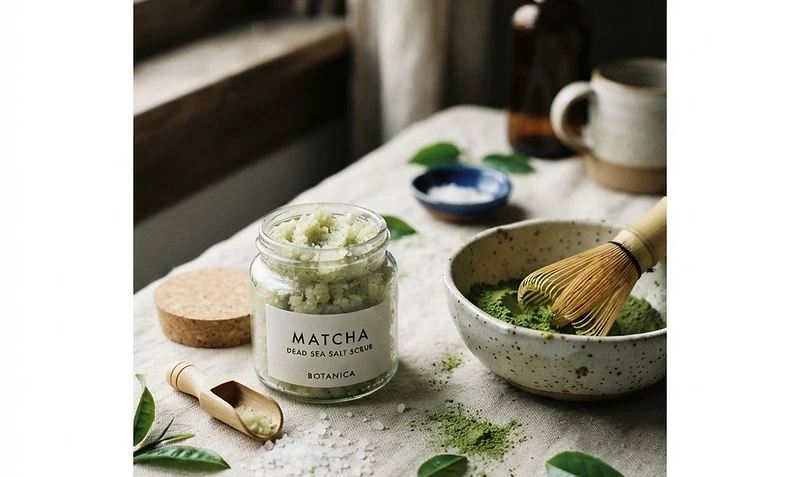
Ingredient Journal · Matcha
The Matcha Antidote
Ceremonial grade matcha is the most antioxidant dense leaf in the apothecary. This is what it does when it stops being a drink and starts being a treatment.
Eight minute read
The Ingredient
Why Matcha, and Not Just Any Green Tea
Matcha is not a tea that wandered into skincare. It is the whole leaf of Camellia sinensis, shade grown for the final weeks of its life so the plant floods its leaves with chlorophyll, then stone ground into a powder fine enough to vanish into water. Nothing is steeped and thrown away. You take the entire leaf, and on the skin you receive the entire leaf's chemistry.
Green tea has been used as a wash, a paste and a poultice across Asia for centuries. What modern research added was the reason why: a family of catechins, chief among them EGCG, that behave as antioxidants, anti-inflammatories and mild photoprotectants at the same time.
- Antioxidants, concentrated well beyond a brewed cup, neutralising the free radicals behind premature ageing
- EGCG catechins, which quiet the inflammatory pathways that surface as redness, itching and reactive breakouts
- Chlorophyll, the pigment that makes matcha green and acts as a natural detoxifier, drawing impurities up and away
- Caffeine, in a dose gentle enough to stimulate microcirculation and reduce puffiness without stripping the barrier
Inflammation
Redness, Reactivity and the Barrier
Most of what we call problem skin is inflamed skin. Sun, wind, hard water, stress and over-cleansing all provoke the same response: heat, redness, a barrier that leaks moisture and lets irritants in. Polyphenols intervene in that conversation. They interrupt the inflammatory signalling that produces visible redness, which is why green tea extracts turn up in formulas for rosacea, post-treatment skin and reactive complexions.
The dermatological literature is specific enough to be encouraging. Topical green tea polyphenols have been shown to reduce inflammation and to protect skin against ultraviolet damage, which makes matcha a reasonable daily ally rather than a novelty.
“Topical green tea polyphenols demonstrate significant anti-inflammatory and photoprotective effects on human skin.”
Journal of the American Academy of Dermatology
Peer reviewed research, indexed on PubMedDetoxification
Chlorophyll Does the Quiet Work
Chlorophyll is the reason matcha is green, and the reason it has been used as a cleansing paste for generations. It binds to impurities sitting on the surface of the skin and, together with the salt around it, helps lift them away.
Think of it as the sweep before the polish. It clears what dulls the complexion, and every mineral that follows gets a cleaner surface to work on.


The Base
Why It Sits on Dead Sea Salt
Matcha on its own is a powder. Matcha carried on Dead Sea salt is a delivery system. The salt is one of the most mineral dense substances on earth, and its magnesium and potassium content means the botanicals arrive on skin that is already being softened, hydrated and calmed.
The salt handles the physical exfoliation and the mineral work. The matcha handles the antioxidant and anti-inflammatory work. Neither one is decoration.
“Dead Sea salt balneotherapy significantly improves skin barrier function and reduces inflammation in atopic dermatitis patients.”
International Journal of Dermatology
Clinical study findings, indexed on PubMed
137x
more antioxidants than brewed green tea
21+
Dead Sea minerals in the base
2-3x
weekly use for the best result
In Motion
Watch the Matcha Ritual
Powder, salt and water doing what they have always done. A minute of the antidote, up close.
Practice
The Ritual, Properly Done
- 01
Start wet
Take a small handful in the shower, on warm, wet skin. Water is what lets the salt dissolve into minerals instead of scraping.
- 02
Work in slow circles
Move in circles over legs, arms, shoulders and back with light pressure. Exfoliation is a polish, never a punishment.
- 03
Give it two minutes
Let the salt and the matcha sit on the skin for a minute or two. This is where the magnesium and the catechins get their time with your barrier.
- 04
Rinse, then seal
Rinse with warm water, pat dry, then press in a body oil or moisturiser while the skin is still a little damp. That is the step that keeps the glow.
- 05
Twice a week, three at most
Skin repairs between sessions. Over-exfoliating undoes the calm you came for, so let the space between rituals do its share of the work.
Suitability
Who the Matcha Antidote Is For
- Dull, tired skin, the complexion that has stopped reflecting light. Gentle resurfacing and caffeine bring the glow back within a few uses.
- Redness and reactivity, skin that flushes at the smallest provocation, where calming polyphenols matter more than a strong scrub.
- Congested, breakout prone skin, matcha clears surface debris while Dead Sea zinc and magnesium settle the inflammation around active breakouts.
- Uneven tone and post-acne marks, consistent exfoliation smooths the texture that makes marks look deeper than they are.
- Sun stressed skin, antioxidants do their best work on skin that has spent time outdoors, mopping up the oxidative damage of the day.
Not for broken, freshly shaved or seriously irritated skin. Patch test first, and go gently around the face.

The Antidote
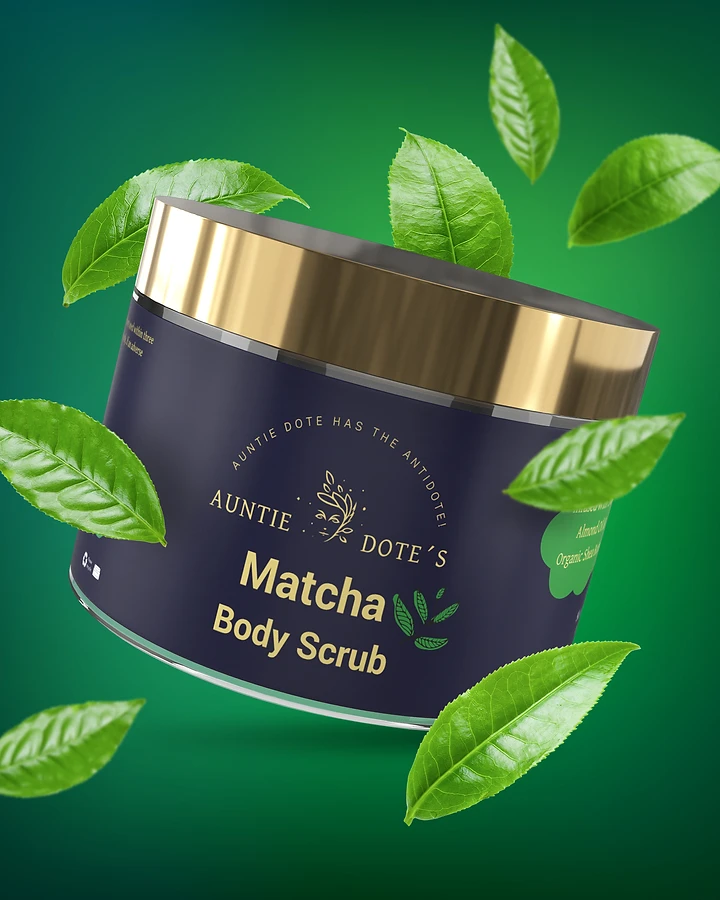
Matcha Dead Sea Salt Scrub
Exfoliate, Detoxify and Nourish All-In-One
Ceremonial matcha, cold pressed sweet almond oil and 21 plus Dead Sea minerals. The antidote for dullness.
$19.99
Shop This AntidoteSources and Further Reading
- Topical green tea polyphenols and skin inflammation, peer reviewed literature index
- Matcha and EGCG catechin research, antioxidant and barrier studies
- Dead Sea salt and balneotherapy in dermatology, clinical study findings
- American Academy of Dermatology, skin care basics, gentle exfoliation guidance
Auntie Dotes publishes ingredient research for interest, not as medical advice. Patch test before first use and speak with a dermatologist about persistent skin conditions.

